
What Children Learn In Japanese schools
Is Not Written In Textbooks
Live Japanese Education, Not As A Visitor But As A Student
For international children aged 9–15
seeking real immersion in Japan through
public schools and community life.
Education As Daily Life, Not A Program
In Japanese public schools,
children are not constantly instructed or evaluated.
Instead, they learn by participating —
in classrooms, in hallways, in shared responsibilities.
Cleaning classrooms.
Serving lunch.
Working through conflicts.
Showing up every day.
These experiences quietly shape
self-management, cooperation, and resilience.
What Japanese Elementary Education Really Develops
The strength of Japanese elementary education
is not found in test scores.
It is found in what children learn
without being explicitly taught.
- Reading the situation before acting
- Taking responsibility for shared spaces
- Cooperating with people you did not choose
- Recovering from mistakes and starting again
These non-cognitive skills are not taught as subjects.
They are learned through repetition, routine, and real consequence.
Why Rural Communities Matter
In rural Japan, community life is unavoidable.
There are fewer people.
Fewer services.
Fewer places to disappear.
Because of this, children are needed.
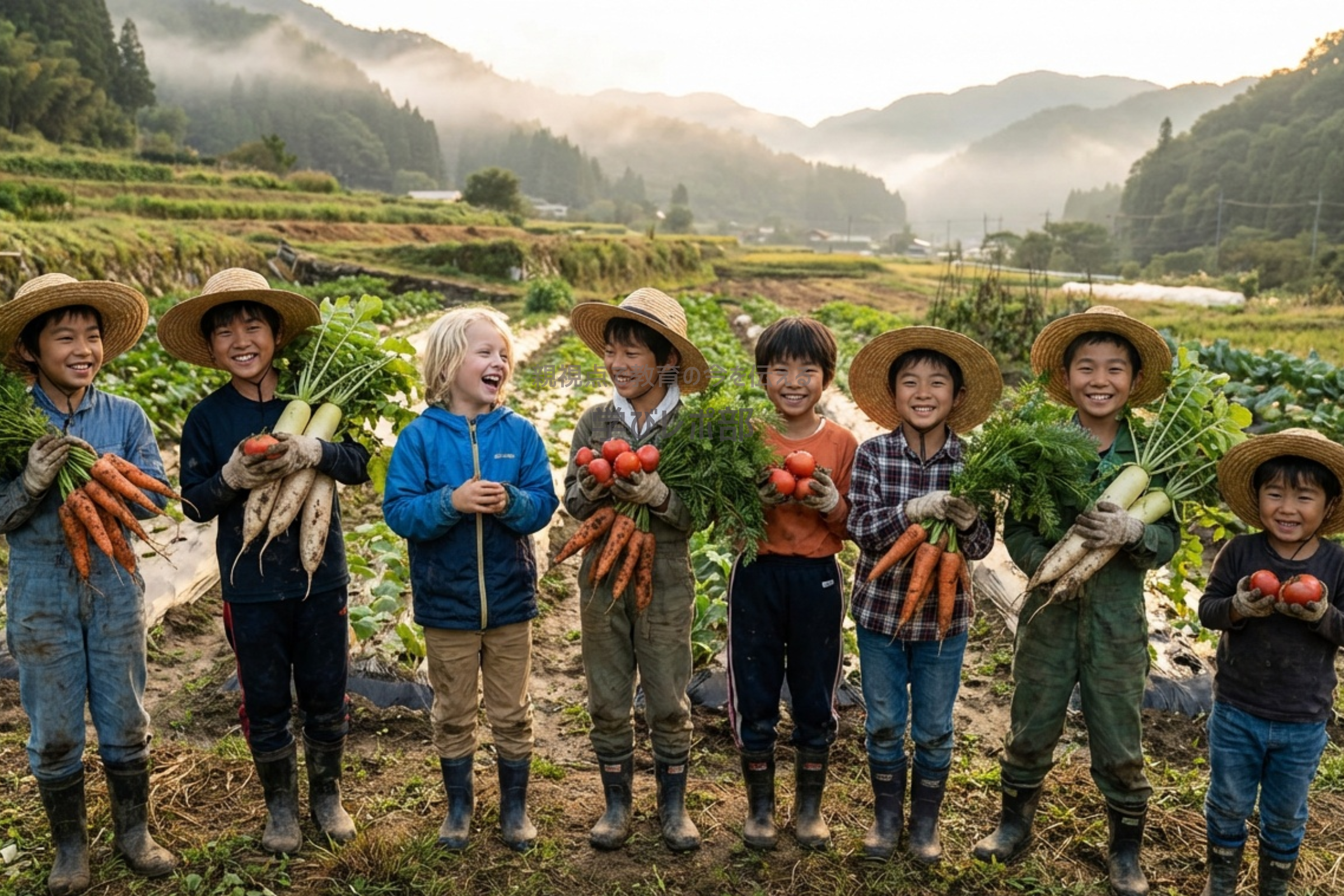
They cook together.
They care for shared spaces.
They rely on one another.
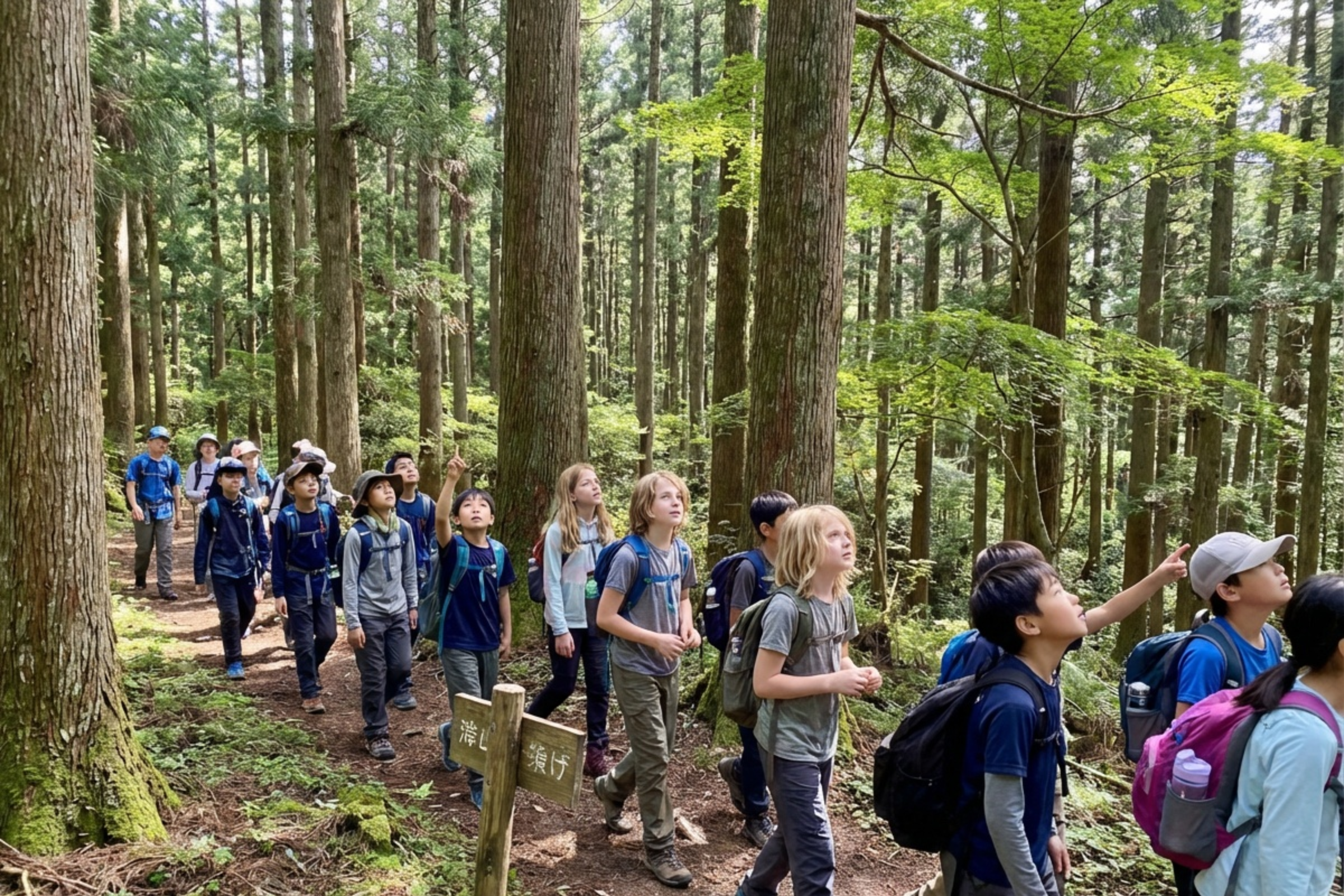
Nature here is not a “program.”
It is simply where life happens.
How The Experience Is Structured
Daytime: Public School Life
Children attend local public elementary or junior high schools
as enrolled students, not visitors.
They follow the same schedule, rules,
and responsibilities as their Japanese classmates.
After School & Weekends: Community Living
Outside of school, children live together
in dormitory-style community housing run by local NPOs.
Life skills, cooperation, and independence
are developed through shared daily responsibilities.
Program Pathway
🌸 Step 1: Summer Program (1–3 weeks)
A low-commitment introduction to school life and rural boarding.
・Ideal for first-time families
・Parent visit and interviews included
🏔️ Step 2: Full-Year Program (12 months)
Deep immersion through a full academic year.
・Japanese public school enrollment
・Rural boarding life
・Year-round guardian support
This Is Not Easy
This experience is demanding —
not because it is poorly designed,
but because it is real.
- Daily life is conducted primarily in Japanese
- Communities operate on trust and responsibility
- Medical access and distance require preparation
- Most importantly, the child’s own motivation matters
This environment is not suitable for every family.
And that is intentional.
Who This Experience Is For
This Program Is For Families Who:
- Value long-term growth over quick results
- Understand that discomfort can be educational
- Trust their child’s ability to grow through challenge
This Program Is Not For Families Who:
- Prefer fully English-based environments
- Expect constant supervision or instant outcomes
- View education as a managed experience
🎬 About The Documentary
Instruments of a Beating Heart introduced the world to the quiet power of Japanese elementary education.
This program is not affiliated with the film,
but it offers children the chance to experience the same educational philosophy — from the inside.
Is This Right For Your Child?
Important Questions Before You Ask
What ages is this program designed for?
This program is designed for international children approximately 9 –15 years old.
Eligibility depends on maturity, adaptability, and school readiness rather than age alone.
All applicants are reviewed individually.
How long can my child participate?
There are two pathways:
- Summer Program: 1–3 weeks
- Full-Year Program: One Japanese academic year (April–March)
We will discuss the most appropriate option based on your child’s background and goals.
Does my child attend a real Japanese school?
Yes. Children attend local Japanese public schools as enrolled students,
not as visitors or observers.
They follow the same daily schedule as Japanese classmates.
Can families apply directly to Japanese schools?
In most cases, placement requires coordination with schools, local education boards, and guardianship arrangements.
We support families through this process to ensure legality, safety, and continuity, especially for international students.
Do children need to speak Japanese before joining?
No prior Japanese fluency is required.
However, children should be open to learning and adapting.
Japanese language support is provided naturally through daily school life
and local immersion.
How does guardianship work?
Each child is supported through a dedicated guardianship system, including:
- Local adult supervision
- School communication support
- Emergency response coordination
- Ongoing family updates
Details are shared during the inquiry process.
What about safety and emergencies?
Safety is a core priority.
- Clear emergency protocols
- Local on-site coordination
- Direct communication with schools and families
This program is intentionally small to ensure close supervision.
When is the best time to apply?
For the Full-Year Program, inquiries are recommended 6–12 months in advance.
For the Summer Program, early inquiries are strongly encouraged due to limited capacity.
How much does the program cost?
Costs vary depending on program length, support level, and guardianship needs.
Because each placement is customized,
program details and fees are shared after an initial inquiry.
Is this program right for every child?
Not necessarily.
This experience is best suited for children who are:
- Curious and adaptable
- Comfortable with structure and responsibility
- Interested in cultural immersion, not tourism
We carefully review each inquiry to ensure the right fit for everyone involved.